

.png)
Think Before You Click “Unsubscribe”

What happens when your inbox starts overflowing? When another unwanted email appears, you scroll straight to the bottom and click Unsubscribe.
Problem solved, right?
Usually.
Legitimate companies must provide ways to opt out of marketing emails, and those unsubscribe links work as they’re supposed to. The problem is that cybercriminals know we’ve been trained to scroll and click on them too. They can also create a fake unsubscribe button that turns out to be just another malicious link.
Even worse, clicking it can tell a scammer that somebody is actually reading the emails at the address.
Not Every “Unsubscribe” Button Is Real
Phishing emails can imitate practically every part of a legitimate message. That even includes the footer.
A scam email might contain company information, social media icons, privacy links, and an Unsubscribe button at the bottom. All those little details help make the email feel more authentic to their targets.
The unsubscribe link doesn’t necessarily have to unsubscribe you from anything. It could send you to a phishing website, a malicious download, or another page designed to collect information.
This creates an interesting problem: You recognize an email as unwanted, but interacting with it can still be exactly what the sender wants.
Clicking Can Confirm Your Email Is Still Active
Spammers send enormous numbers of emails, and they don’t always know which addresses belong to real people. An email address could be abandoned, mistyped, or rarely checked. How often does that happen when you’re sending legitimate emails during your workday?
Your interactions provide two other clues: How often you check your inbox and what you do when you get a message.
If an unsubscribe system controlled by a malicious sender records your click, the sender now has evidence that somebody actually pays attention to that inbox. That can make the address more useful for future spam or scams.
Think of it like answering the door when a prospective intruder goes down the block, knocking on every door. You didn’t give them your password; you simply confirmed that you’re home.
Should You Stop Unsubscribing?
There’s a very important distinction between legitimate marketing and suspicious email.
If you knowingly signed up for emails from a reputable store, newsletter, organization, or service, then you can probably use its unsubscribe feature without an issue.
The situation changes when the email itself looks suspicious.
Maybe you’ve never heard of the sender. Perhaps the message promises a prize, threatens an account closure, contains strange formatting, or seems completely unrelated to anything you’ve signed up for.
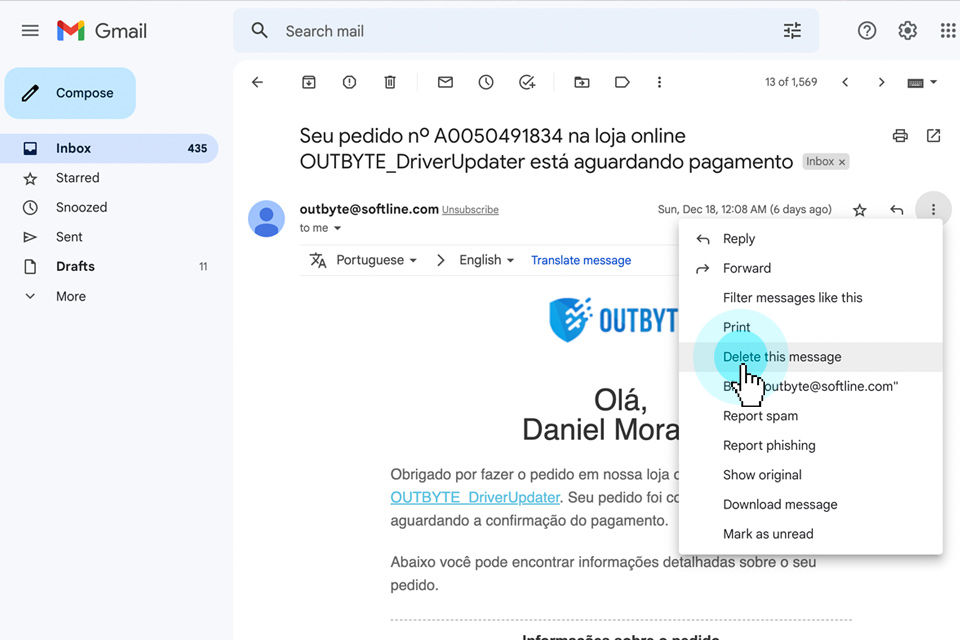
In that situation, don’t click around the message trying to make it go away. Mark it as spam or junk instead. Your email provider can then filter similar messages without requiring you to interact with the sender.
Watch Out for Fake Preference Pages, Too
Some suspicious unsubscribe links lead to pages that ask for additional information. For example, when you click Unsubscribe, suddenly the website wants you to enter your email address to confirm your decision. Then it asks you to log in. Maybe it wants your password to “confirm your identity.”
Stop right there.
You shouldn’t have to surrender sensitive information just to stop unwanted emails. A fake preference page can simply be a phishing page wearing a different costume.
Always ask yourself why the website needs the information it’s requesting before just handing over your credentials.
Use the Tools Your Email Provider Gives You
Many modern email services have built-in unsubscribe features for recognized mailing lists. You might see an Unsubscribe option near the sender’s name rather than buried inside the message.
When your email provider offers that feature for a legitimate mailing list, it can be a better option than hunting for a link yourself.
For suspicious messages, stick with Report Spam, Report Phishing, or alert your organization through approved notification methods.
If the email arrived at work and you’re unsure whether it’s malicious, send it to your IT or security team instead of investigating the links all by yourself.
Conclusion
Clicking Unsubscribe feels like the responsible move to make when you receive an unwanted email. Most of the time, you can do that safely. Just remember that cybercriminals can imitate an unsubscribe button as easily as they can imitate a login button.
Use unsubscribe links with legitimate companies and mailing lists you recognize. When an email looks suspicious, don’t interact with it just because you want it out of your inbox.
Report it. Delete it. Then move on.
Sometimes, the safest way to tell a scammer you’re not interested is to report them and never tell the scammer anything.
Comments